
What is the Serration gage used for?
The serration gage checks whether a prepared Crownsert hole is ready for insert installation. Used after broaching and before fitting the insert, it verifies the serrated counterbore that will receive the insert’s locking collar during swaging.
Why Check the Serrations?
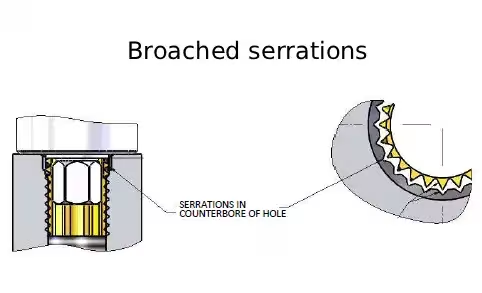
Crownserts are secured by swaging their serrated collar outward into the surrounding material. Where pre-broaching is required, grooves are first cut into the counterbore to receive that collar and help prevent the installed insert from turning.
These grooves must meet the specified dimensions. Serrations that are too shallow or a counterbore that is too large can compromise the locking engagement. The serration gage checks this preparation before the insert is fitted, when any problems can still be corrected.
How the GO and NO-GO Checks Work
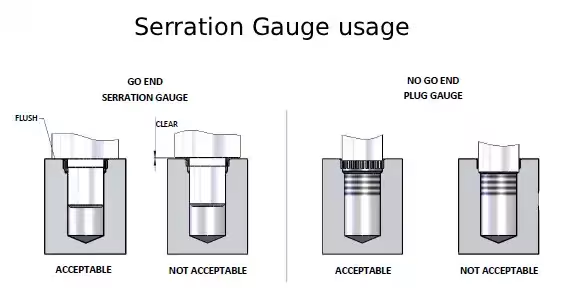
The combined serration gage shown in the Technicut guide performs two checks. Its shaped GO end checks the minimum diameter over the serrations and their minimum depth. Its plain NO-GO end checks that the counterbore is not oversized.
GO End: Should Seat Flush
Align the GO end with the prepared serrations and insert it gently. For this gage design, an acceptable result is indicated when the shoulder sits flush against the component surface. A gap indicates that the preparation does not pass the GO check.
The triangular GO end checks three serrations at a time. Technicut recommends repeating the check in at least three rotational positions to inspect more of the serrated profile.
NO-GO End: Should Not Enter
Check the counterbore with the NO-GO plug end. It should not enter the counterbore. If it does, the counterbore is oversized and the hole does not pass inspection.
Both checks must pass before proceeding with installation. Follow the acceptance criteria supplied with your particular gage.
Before You Begin
Select the gage specified for the Crownsert size and series; standard and heavy-duty inserts can require different tooling. Remove chips, burrs, grease and oil from the prepared hole, then inspect it for damage. Check the tapped thread separately with the appropriate thread gage.
Once the preparation passes inspection, install the Crownsert and swage its locking collar into place. The serration gage checks the hole before installation; the after-swage gage checks the insert’s setting after swaging.